
-

As the Global Hausbank, we aspire to be a trusted transition partner for our clients by aligning our products and solutions with evolving environmental, social, and governance needs.
Investor Resources on ESG
A message from our Management Board
 |
"Sustainability is a critical success factor for our bank and a central element in our Global Hausbank strategy. We want to take advantage of the opportunities that are available to us in this area." Christian Sewing, CEO |
||
 |
"Our Transition Plan sets out what clients and the public can expect from us as we scope out our role in decarbonizing the economy. As the economy progresses toward net-zero, regulations, reporting standards, and the role of the banking industry evolve. This will allow us to continuously refine our approach to become net-zero by 2050." Jörg Eigendorf, CSO |
||
 |
"To drive a successful transformation, we need to bring teams together and leverage different perspectives. We have found that encouraging diverse views and respectful challenge make our teams more effective. This is one reason why we value diversity, equity and inclusion." Rebecca Short, Group COO |
||
-

Environment
A core part of Deutsche Bank’s sustainability strategy is our commitment to act as a partner in financing and advising clients as they pursue transition objectives aligned with the Paris Agreement
Deutsche Bank has identified three measures intended to support the decarbonisation of its corporate loan portfolio:
- providing transition financing
- rebalancing our loan portfolio towards clients focused on developing decarbonisation plans
- reducing exposure to clients with limited capacity or willingness to decarbonize
Find more about our net-zero targets, scope and implementation approach
-

Social
Our CSR initiatives support education, enterprise and community programs, with results reported through defined program indicators.
The strategic focus of our social engagement is on education, enterprise, and community. We encourage our employees to contribute their professional expertise and life skills. We aim to maximize the impact of our CSR activities by engaging our stakeholders, forging long-term partnerships with charities, supporting advocacy initiatives, and working with other companies and organizations to promote impact monitoring.
Our CSR activities are intended to support stakeholder engagement and employee participation as a socially minded enabler, reliable partner, and catalyst for societal change.
Find more about our corporate social responsibility programs
Empowering and and supporting our employees is an integral part of our HR strategy. We promote a speak-up culture where our people can be heard and turn ideas into impact. We want all individuals to feel welcomed, accepted, respected, and supported. We aim to support effective collaboration by encouraging diverse perspectives and respectful challenge.
-

Governance
The transition to a lower-emissions economy is expected to create opportunities. Simultaneously, we must scrutinize our business activities and our operations for potential negative impacts and understand the environmental and social risks involved. Systematic evaluation of these risks is an integral part of our risk management processes.
This also covers reviewing our business activities under Deutsche Bank’s Environmental and Social (ES) Policy Framework and our Sustainable Finance Framework.
Our Sustainable Finance Framework, established in 2020, outlines the methodology and associated procedures for classifying qualifying financing and investment activities under the criteria set out in Deutsche Bank’s Sustainable Finance Framework. The framework serves as a basis for informed decisions on sustainable products and services.
Our Sustainability governance helps us to manage, measure, and control our sustainability activities across the bank. The most senior forum is the Group Sustainability Committee that focuses on adjustments to ESG metrics, transition dialog with clients, and deep dives on the bank’s sustainability targets, ambition level, and key milestones. In September 2022, we established the role of Chief Sustainability Officer to bolsters sustainability activities.
Show content of Cumulative sustainable and transition finance target of EUR 900bn by the end of 2030
- Deutsche Bank’s updated target is to facilitate EUR 900 billion sustainable finance, ESG investments, and transition finance (ex-DWS) by the end of 2030. This figure includes EUR 471 billion already achieved in sustainable finance and ESG investments from January 2020 through the end of 2025, as defined in Deutsche Bank’s Annual Report
- For its new target, the bank distinguishes between sustainable finance and transition finance. Under Deutsche Bank’s Sustainable Finance Framework, sustainable finance includes financing classified according to the framework’s environmental and social criteria
- Transition finance involves the financing of activities required on a pathway assessed against the transition criteria set out in Deutsche Bank’s Transition Finance Framework
Show content of Supporting our clients in their transformation journey for the targeted phase-out of fossil fuels
- We also pledged to no longer finance new oil and gas projects in the Arctic or oil sand projects. More information on this is provided in chapter “Environmental and social due diligence – Environmental and social policy framework” in our Annual Report 2025
- In 2024, Deutsche Bank updated its Sustainable Finance framework to ensure updated standards for lending and bond issuance. The bank also published its Sustainable Finance Instrument Framework, expanding its Green Financing Framework to include social assets for refinancing. Deutsche Bank issued its inaugural social bond, raising EUR 500 million, which was 13 times oversubscribed. Towards the end of 2024, the bank published an ESG Investment Framework to provide transparency on the classification methodology for assets under management
Show content of Disclosure of targets and pathways for the alignment of our portfolio to the objectives of the Paris Agreement and Net-Zero Commitments
- Deutsche Bank aims to align its lending and investment portfolios to net zero by 2050 and has, therefore, published net-zero targets for eight carbon-intensive sectors in the bank’s corporate loan book by end of 2030 (interim) and end of 2050 (final)
- Deutsche Bank targets a 46% reduction in emissions linked to its own operations and supply chain (Scope 1, Scope 2 and disclosed Scope 3: Category 1 to 14) by the end of 2030 from a 2019 baseline. Scope, methodology and implementation information: Annual Report
Show content of Increase gender diversity in leadership roles “35% by 2025”
- More female leadership: 35 percent of Managing Director, Director and Vice President positions are to be represented by women by 2025 and at least 30% women in management positions one and two levels below the Management Board. Read how we advance women in leadership positions
- By year end 2024, 33.0% of Managing Director, Director, and Vice President roles at the bank were held by women
- Additionally, 28.9% of roles reporting directly to Management Board members (Management Board -1) and 28.3% of roles two levels below Management Board (Management Board -2) were held by women, showing progress toward the bank's goal of 30% at both levels.
- Further aspirational goals on race and ethnicity
Show content of Actively engaging in regulatory discussions and industry initiatives
- Through thought leadership and stakeholder engagement, we contribute to public debate on climate change and sustainable growth
- We are contributing to the discussions on developments in sustainable finance with trade associations, and responding to consultations, including those from the European Banking Association, the Network for Greening the Financial System and the Technical Expert Group set up by the European Commission
- We launched dbSustainability, a dedicated sustainability research platform providing thought-provoking, value-added and aligned content spanning thematic, macro, quantitative and individual company analysis
Our contribution
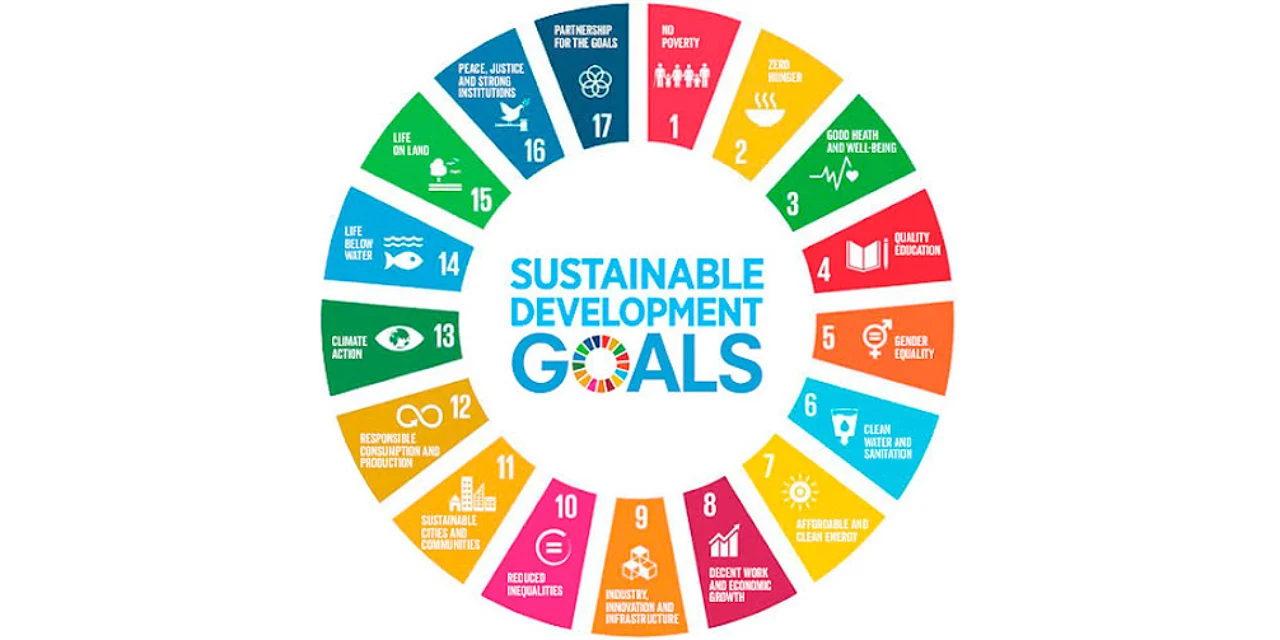
We assess the contribution of our financing and issuance activities, to the SDGs to provide additional insights into the areas our businesses are contributing to.
Find out our contribution to the United Nations Sustainable Development Goals in our latest Non-Financial Report.


Selected ESG Ratings & Assessments
As per May 2026
Deutsche Bank’s sustainability performance is regularly assessed by leading international ESG rating agencies. These assessments provide valuable information for investors and other stakeholders. They provide Deutsche Bank itself with an insight into the performance of its business in comparison to its competitors, while at the same time providing an incentive to continuously optimize processes and stakeholder involvement.
The market for ESG ratings is not fully regulated and has a large number of market participants. Therefore, Deutsche Bank focuses on the rating agencies, which are considered relevant to investors and customers as well as to the sustainability performance and whose methodological approach is transparent.
S&P Global CSA |
68 |
2024: 67
2023: 54
2022: 59
Scale (best to worse):
100 to 0
MSCI ESG Ratings |
AA |
2024: AA
2023: A
2022: A
Scale (best to worse):
AAA to CCC
Sustainalytics ESG Risk Rating |
9.0 |
2024: 24.8
2023: 27.9
2022: 27.9
Scale (best to worse):
0 to 100
CDP Climate Change |
A |
2024: B
2023: B
2022: B
Scale (best to worse):
A to D-
ISS ESG Corporate Ranking |
C+ Prime Status |
2023: C (Prime Status)
2022: C (Prime Status)
2021: C (Prime Status)
Scale (best to worse):
A+ to D-
DVFA Scorecard for Corporate Governance |
92.9%Excellent |
2024: Very good – 88.2%
2023: Very good – 89.2%
2022: Very good – 80.2%
Scale (best to worse):
100% to 0%
Current developments:
- CDP score on climate change is A which is an improved top score result compared to B in prior years. As a result, Deutsche Bank is named on CDP’s A-list, listing all companies that reached A score. In 2025, only 4% of all 22.100 scored companies reached an A
- In the ISS ESG Corporate Rating, Deutsche Bank has achieved a C+ for the first time and is therefore one of the few companies in the industry to achieve this rating
- The MSCI score improved from A to AA in 2024
- S&P CSA score increased from 67 in 2024 to 68 in 2025
- Sustainalytics ESG Risk Rating: After last full review in 2025, Deutsche Bank reached initially 16.3 which improved further to 9.0, being now at negligible risk in ESG risk rating
The Bank is continuously working to improve its transparency on sustainability performance so that the progress of sustainability management is reflected in ESG ratings.
Explore the latest

Responsible Growth
Find out how we are helping to shape the change to a sustainable and climate-neutral economy

Thematic ESG
Read relevant Analysis on key thematic ESG discussions for investors and corporates